◆ Cross-Border Tax
·5 min read
The US Tariff Refund Goes to One Name. Is It Yours?
Billions in US tariffs are being paid back. For Canadian exporters, who gets the money depends on one line in the paperwork.
Jasneet Singh, CPA (NY)
Founder & Managing Adviser, Bibeka Advisory ·
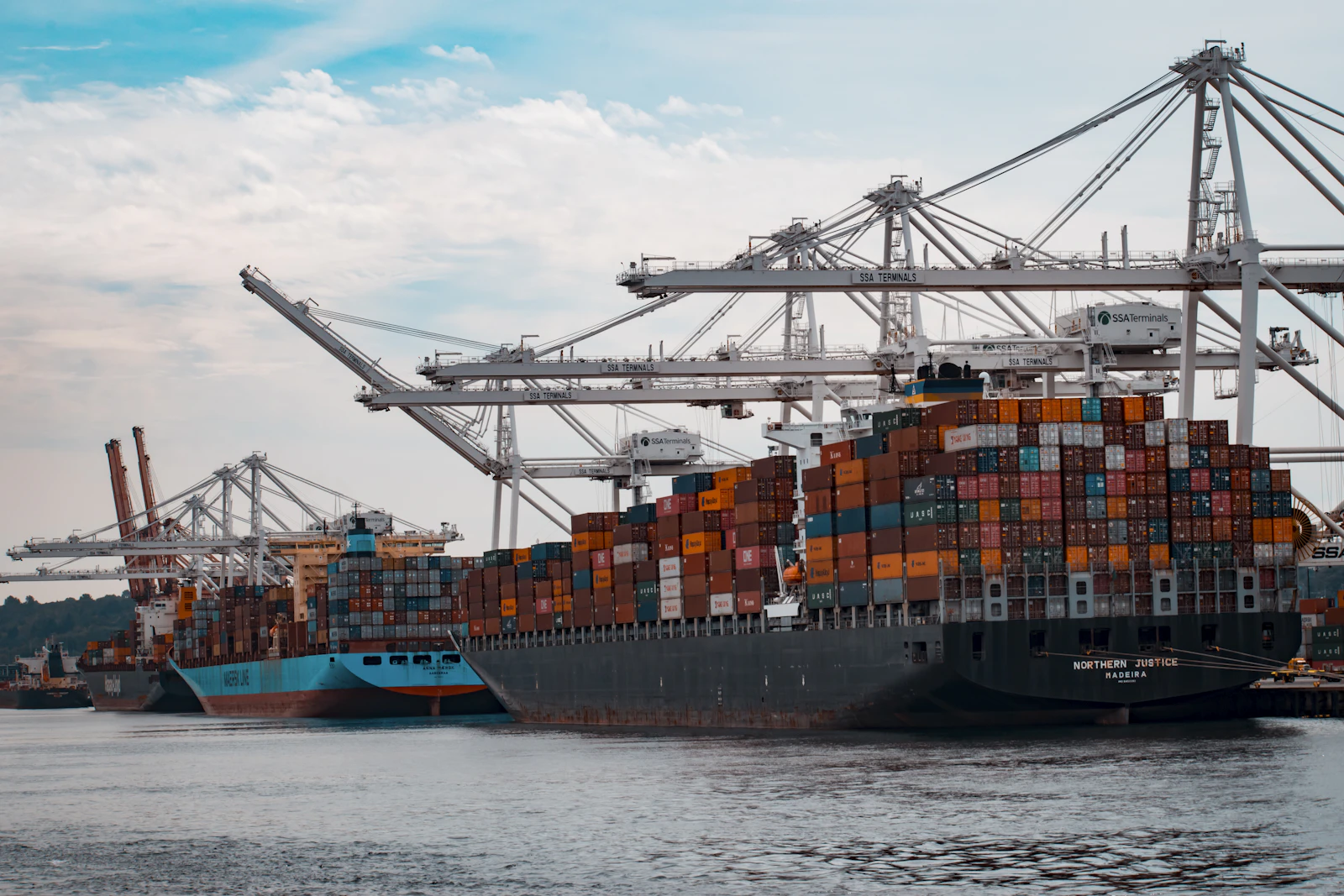
Some of the US tariffs you paid are coming back. The question is who they're coming back to.
Which tariffs come back, and which don't?
Only one set is being refunded: the IEEPA tariffs collected up to February 24, 2026. On Canadian goods, they started March 4, 2025. Steel, aluminum, autos, lumber and the tariffs added since February 2026, including the 50 per cent duty on some Canadian goods (in force since August 19, 2026, and widened to more goods on August 22), are not being refunded.[3][4][5]
Why refund one tariff while charging another?
In February 2026, the US Supreme Court ruled that the emergency law behind them never allowed tariffs, so the money must be returned. The administration then imposed new tariffs under different laws, and those stay in force unless a court strikes them down too. You get back the unlawful ones while paying the ones still standing.
US Customs and Border Protection (CBP) is paying them back with interest: about US$126 billion approved by early October.[1]
The catch is one line of paperwork. The refund goes only to the business named on each US customs entry. Many Canadian exporters carried the cost without being that name.
What you will learn
How to check whether the refund is yours, and what it does to your books.
Two checks before anything else
Check 1: Did your goods pay this tariff at all?
Goods that qualified under CUSMA, the trade agreement between Canada, the US and Mexico, were exempt from March 7, 2025. To qualify, a product must meet CUSMA's rules on where it was made, and the claim is usually made at the border.[6]
So ask your customs broker one question: did any of our shipments cross without a CUSMA claim? Even CUSMA goods paid it from March 4 to 6, 2025, before the exemption began, and goods made outside North America never qualified. About one-third of small Canadian exporters shipped goods that didn't qualify.[2]
Check 2: Whose name is on the customs paperwork?
Every shipment into the US has a customs entry. That entry names one business as the "importer of record". Only that business can get the duty back.
It might be you, your US customer, or, for parcels, your courier. Your broker or courier can tell you whose name is on each entry.[7]
Only about one in four affected exporters (26 per cent) was the importer of record. For most, the refund is going to someone else.[2]
Where the real decisions sit
Filing is paperwork. The harder questions are financial: where the money lands, who really paid, and how it hits your books. That is where Bibeka works with owners.
If you were the importer: give the money somewhere to land
You can claim, usually through your broker, but each entry's age matters. Recent entries go through CBP's online system. The oldest, from early 2025, may need a protest or court filing, which is a lawyer's question.[1]
CBP pays refunds only by electronic transfer to a US-dollar account at a US bank. A Canadian account, even a US-dollar one, doesn't qualify.[3]
Some refunds have already been rejected or returned because no qualifying US account was on file. An approved refund that can't be paid is still cash you don't have.[8]
The money can go to the importer's own US account, or to a third party it formally names, such as its broker. Either way, it must trace back to the importer's claim, or your books stop matching. Bibeka can walk you through the options and what to ask your bank.
If your customer was the importer: count what you absorbed
You can't claim from CBP. But through 2025, many exporters cut prices or offered discounts to keep US accounts.[3]
Picture a hypothetical Ontario parts maker whose US distributor was the importer of record. It cut its price to keep the account, so it carried part of the duty on every invoice. Now the refund, with interest, goes to the distributor.
Can you ask for some of it back? You can always ask. Whether you can insist depends on what is on paper.
Your footing is strongest if your contract has a clause on tariff changes, such as a price adjustment or cost-sharing term. A written price notice that tied your discount to the tariff also helps. A general price cut, with nothing linking it to the tariff, is much weaker. There is little court guidance yet.[9][10]
For tens of thousands of dollars, a cross-border lawsuit against your own customer can cost more than it recovers, and lose you the account. The practical path is usually a polite, written request backed by a clear number. Working out that number, invoice by invoice, is accounting work. Whether your contract gives you more than a request is a question for your lawyer.
Either way: the money changes your books
If you were the importer, the tariff was part of what your goods cost. The refund reverses it: it lowers inventory for goods still on hand, or cost of sales for goods already sold. The interest is recorded separately as other income. The deposit may also be smaller than the claim, because CBP can deduct other amounts owed.[11][12][1]
If your customer was the importer, the tariff never touched your cost of goods. It showed up as lower sales. Anything your customer pays back generally adjusts revenue or other income, not cost of sales.
Under the rules most Canadian private companies follow, neither is booked until confirmed. It then lands in that year's results, not last year's.[13]
Get this wrong and your margins mislead you, along with the pricing, bank covenants and sale value built on them. The Canadian tax side deserves its own look; that's our next article.
Who to call for what
| The question | Who answers it |
|---|---|
| Whose name is on each entry? | Your customs broker or courier |
| Filing the refund claim | The importer of record, or its broker |
| Older entries needing a protest or court filing (some deadlines may start in early 2027) | A trade lawyer |
| What you absorbed, where the money lands, how it hits your books | Bibeka |
Find the name, then follow the money
The owners who come out ahead will be the ones who knew whose name was on the paperwork, and what it meant for their numbers.
Three questions to sit with:
- On every US shipment since early 2025, whose name was the importer of record?
- If it wasn't yours, how much of the tariff did you absorb through price?
- When a refund arrives, which line of your books does it reverse, and in which year?
If any of these made you pause, let’s talk.
Start a ConversationSources
- [1] Great Lakes Customs Law, The IEEPA Tariff Refund Guide (updated October 2026), summarizing CBP's October 6, 2026 court declaration
- [2] CFIB, Some Canadian businesses may be eligible for U.S. tariff refunds (April 21, 2026)
- [3] CFIB, How Canadian businesses can get refunds for U.S. IEEPA tariffs
- [4] Government of Canada, Trade Commissioner Service: Resources for Canadian exporters facing U.S. tariffs
- [5] Taft Law, New Section 338 tariffs on Canadian goods (August 2026)
- [6] GHY International, CBP clarifies IEEPA tariff refunds under USMCA claims
- [7] Prepvia, The IEEPA refund follows the importer of record (October 2026, commercial guide)
- [8] Bodman PLC, Non-resident importers may need to take immediate action to avoid delays in receiving tariff refund payments (May 7, 2026)
- [9] Jones Walker LLP, Who gets the tariff refund? (February 2026)
- [10] Carter Ledyard & Milburn, New York Law Journal (August 2026)
- [11] Deloitte, Accounting considerations related to the Supreme Court's ruling on tariffs
- [12] KPMG, Supreme Court overturns IEEPA tariffs: financial reporting considerations
- [13] MNP, ASPE 3280 and 3290 snapshot: contractual obligations and contingencies
- [14] U.S. Customs and Border Protection, IEEPA Duty Refunds
This article is general information as of October 30, 2026, not tax, legal or accounting advice for your situation. Tariff rules and refund processes are changing quickly, so check CBP's IEEPA refund page before acting.
© 2026 Bibeka Advisory · All rights reserved.